Hybrid Inverter vs Inverter Charger: Which One Do You Need?
What hybrid inverters and inverter chargers each do, high vs low frequency, single vs three phase, and how to choose the right one for your home or business.
By the Solar Connect Kenya team · Updated
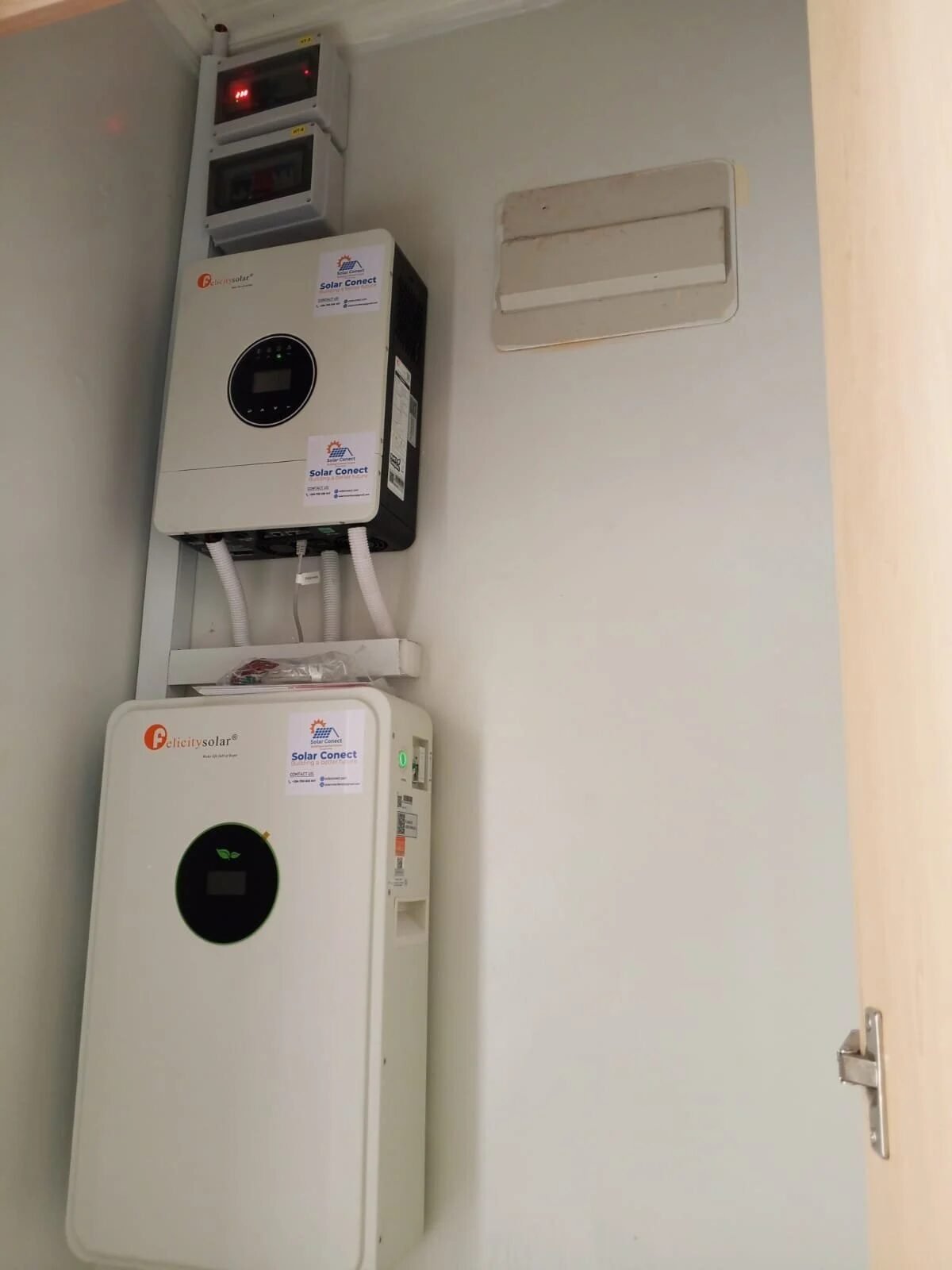
A hybrid inverter combines an inverter, a solar (MPPT) charge controller and a battery charger in one unit. It runs your home on solar first, stores the extra in a battery and falls back to KPLC or a generator when needed. An inverter charger converts battery power to AC and recharges the battery from mains power, but to use solar panels you normally add a separate charge controller. Choose a hybrid inverter for a new solar system. An inverter charger suits backup-first setups, heavy motor loads, or adding panels to an existing system.
“Inverter” gets used for very different machines in Kenyan solar shops, and buying the wrong type is one of the most common reasons a system underperforms. This guide explains the two types we are asked about most, how they differ, and which suits your home or business.
What a hybrid inverter does
A hybrid inverter is the “brain” of a modern solar system. In a single box it:
- converts DC power from your battery and panels into 240V AC for your sockets,
- contains an MPPT solar charge controller, so panels connect straight to it,
- charges the battery from solar, mains or a generator, and
- switches between sources automatically, using solar first and the grid as backup.
Because everything is in one unit, installation is neater and the system can be set to make the most of free solar energy. Many larger models, such as the Deye 8kW single phase hybrid inverter, also offer app monitoring and support lithium batteries over a communication cable.
In our shop, hybrid inverters range from about KSh 25,000 for a 1kVA 12V unit to KSh 780,000 for a 50kW three phase commercial inverter, across Deye, Felicity Solar, Hinen, Solis, SRNE and GoodWe.
What an inverter charger does
An inverter charger is built mainly for backup. It converts battery power to AC during an outage, and when mains power returns it passes power through to your home and recharges the battery.
Most inverter chargers in our range do not include a solar charge controller. To add panels, you pair them with a separate MPPT charge controller that charges the battery from solar. MPPT controllers in our shop cost about KSh 11,500 to KSh 36,000, from 30A to 120A. Always check the product specifications, because features vary by model.
Inverter chargers in our shop, from Felicity Solar and Must, range from KSh 15,000 for a 0.7kVA unit to KSh 125,000 for a 10kVA 48V unit.
High frequency vs low frequency
You will also see inverters described as high frequency or low frequency. This describes how they are built inside:
- Low-frequency inverters use a large transformer. They are heavier but very robust, and handle the start-up surge of motors, pumps and compressors well. Most of our inverter chargers, such as the Must EP3000 Plus and the Felicity IVPS range, are low frequency.
- High-frequency inverters use electronic switching instead of a large transformer. They are lighter, more compact and usually cheaper for the same rating, and most hybrid inverters are built this way, for example the Felicity IVEM range.
For homes with pumps, welding equipment or large compressors, a low-frequency unit, or a high-frequency unit sized with generous headroom, avoids nuisance trips.
Side-by-side comparison
| Hybrid inverter | Inverter charger | |
|---|---|---|
| Main job | Run the home on solar, battery and grid together | Backup power from batteries during outages |
| Solar panels | Connect directly (built-in MPPT) | Usually need a separate charge controller |
| Charges battery from | Solar, mains or generator | Mains or generator (solar via controller) |
| Typical build | Mostly high frequency | Often low frequency |
| Motor and surge loads | Good, with headroom | Very good (low-frequency models) |
| Best for | New solar installations | Backup-first setups and adding solar later |
| Price range in our shop | KSh 25,000 – 780,000 | KSh 15,000 – 125,000 |
Which one should you choose?
Choose a hybrid inverter if:
- you are installing solar panels now and want to cut your KPLC bill,
- you want a tidy installation with one main unit and app monitoring, or
- you are using lithium batteries and want them to communicate with the inverter.
Choose an inverter charger if:
- your main goal is backup during outages and you may add panels later,
- you run motor-heavy loads and want the surge tolerance of a low-frequency unit, or
- you already have panels and a charge controller and need to replace the inverter.
Not sure what size you need? Start with our step-by-step guide to sizing a solar system for your home.
Single phase, three phase and grid-tie
Most Kenyan homes have a single phase supply, and single phase inverters suit them. Larger homes, flats, schools and commercial buildings often have a three phase supply. For these we supply three phase hybrid inverters such as the Deye SUN-10K-SG04LP3 and the Solis 15kW three phase model.
A third type, the grid-tie inverter (for example the SMA Sunny Tripower 6000TL), feeds solar power into your building alongside the grid with no battery. It lowers your daytime bill, but on its own it does not provide power during an outage.
Tell us what you want to power and we’ll recommend the right inverter.
FAQs
Can a hybrid inverter work without a battery?
Some hybrid inverters can run on solar and grid power without a battery, but you lose backup during outages. Whether it is supported depends on the model, so check the specifications or ask us before you buy.
Can I add solar panels to my existing inverter?
Usually yes. If you have an inverter charger, add an MPPT charge controller matched to your battery voltage and panels. If your inverter is already a hybrid, connect panels within its PV input limits.
What does kVA mean on an inverter?
kVA is the inverter’s apparent power rating. The real power it can deliver in watts is usually a little lower. For example, our Felicity 2.5kVA inverter charger is rated at 2kW.
Is a more expensive inverter always better?
Not necessarily. The right inverter matches your load, battery voltage and supply type. An oversized or wrong-type inverter costs more and can run less efficiently.